




Shopify CRO: A Practical Guide to Conversion Rate Optimization
How Shopify CRO can increase conversions by up to 40% when friction is removed
In this guide, you’ll learn how Shopify CRO is used to identify friction, support buying decisions, and improve conversion performance in real stores.
Conversion rate optimization (CRO) for Shopify is about helping shoppers move from interest to purchase with less friction and more confidence. It focuses on removing hesitation, clarifying value, and improving decision-making across product pages, carts, and checkout.
When CRO addresses a real point of friction, the impact can be significant. In some Shopify stores, focused changes have led to double-digit improvements, and in specific cases, increases of up to 40%, without redesigns or added traffic.
This Shopify conversion rate optimization guide focuses on practical CRO strategies that work within Shopify’s themes, apps, and checkout constraints. This overview is designed for merchants who understand Shopify CRO fundamentals and are evaluating tools to apply them in practice.
What Shopify CRO really means
Shopify CRO is the process of improving how efficiently a Shopify store converts visitors into customers. In real stores, this usually means identifying where shoppers hesitate, get confused, or abandon their journey, and fixing those moments.
In practice, CRO for Shopify means improving conversion performance without breaking theme structure, store speed, or user trust.
CRO is not about constant redesigns, chasing trends, or endlessly testing small details. Across Shopify stores, the biggest conversion gains usually come from:
- clearer product pages
- reduced friction in the cart
- stronger reassurance at decision points
Because Shopify relies on themes, apps, and a standardized checkout, CRO on Shopify has its own constraints. Effective CRO Shopify strategies focus on clarity, speed, and confidence rather than heavy customization.
What affects conversion rate on Shopify
While every store is different, the same conversion drivers appear again and again.
Store speed and theme performance
Slow-loading pages, heavy scripts, or poorly optimized themes create friction before shoppers even engage with products. Conversion improvements often start with performance basics rather than visual changes.
Shopify also cites Google data showing that a 1-second speed improvement can increase mobile conversions by up to 27%.
Product page clarity
Unclear value propositions, weak product descriptions, or missing reassurance lead to hesitation. High-converting product pages answer key questions before customers have to ask them.
Across ecommerce CRO tests, product page improvements are often responsible for the largest share of conversion gains, especially when they reduce uncertainty around price, delivery, and product fit.
Trust and reassurance
Shipping details, return policies, reviews, and consistent design all influence whether a shopper feels confident completing a purchase.
Even small trust cues can matter. Research highlights that shopper confidence is strongly influenced by how secure checkout looks, and checkout UX issues are a common reason people abandon purchases.
Urgency and decision pressure
Urgency can help shoppers act, but only when it reflects something real, such as limited availability or shipping cutoffs. Artificial pressure often reduces trust.
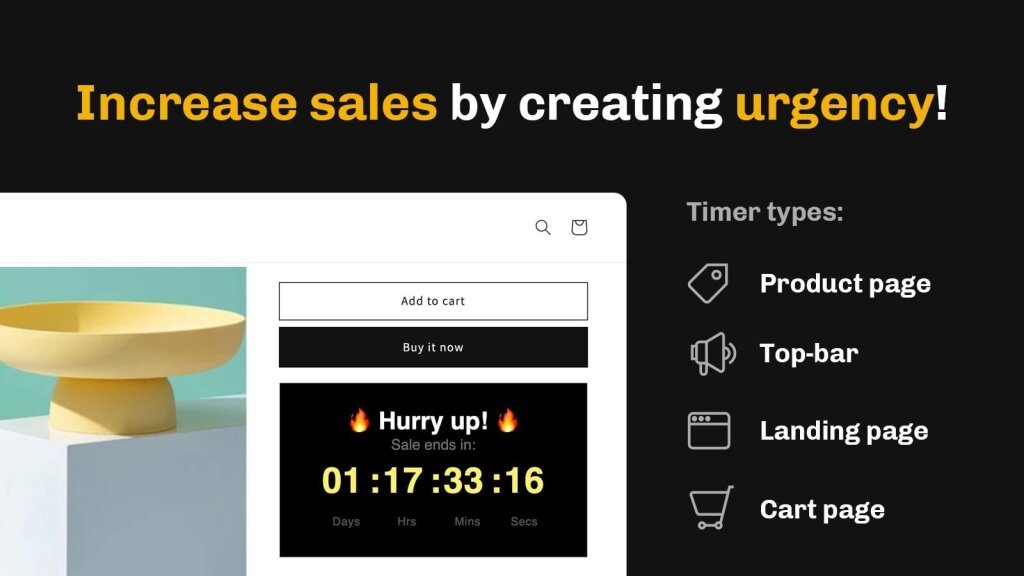
When urgency reflects real constraints, it can have a measurable impact. In one Shopify store, a simple countdown timer increased sales by up to 40% by helping shoppers decide faster, without redesigns or added traffic.
Cart and checkout experience
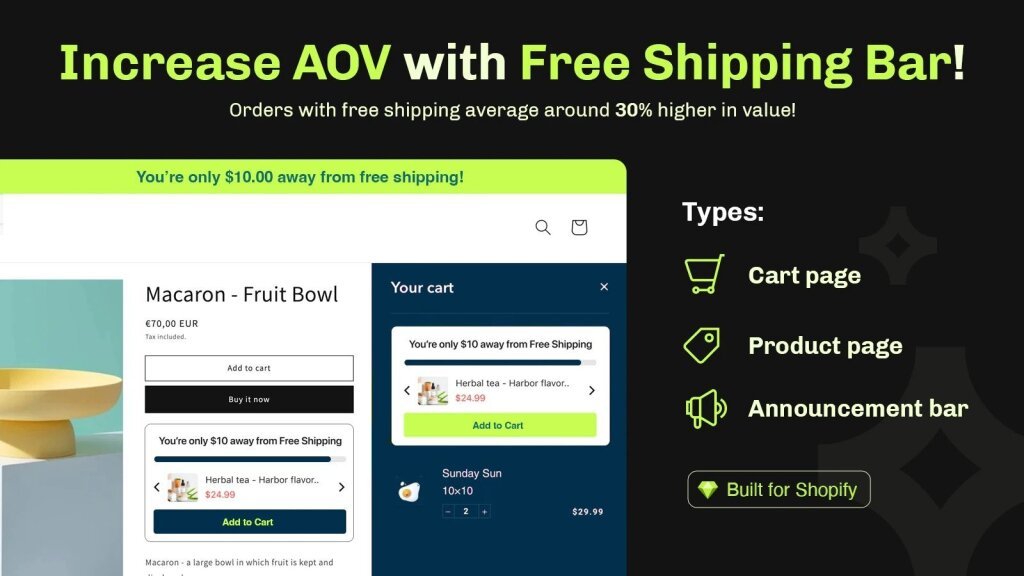
Unexpected costs, unnecessary distractions, or unclear next steps in the cart are among the most common causes of abandonment on Shopify.
Mobile behavior
Most Shopify traffic is mobile. CRO efforts that work on desktop but fail on mobile rarely deliver lasting results.
Find the best Shopify CRO tools for your store
High-impact Shopify CRO areas
These areas have the biggest impact on Shopify conversion rate optimization because they sit closest to real buying decisions.
Product page CRO
Product pages carry the highest conversion potential because they sit closest to the buying decision.
In ecommerce, CRO studies, product page improvements often account for the largest share of measurable conversion gains, especially when they reduce uncertainty around price, delivery, and product fit.
Across Shopify stores, common product page issues include:
- too much information without clear hierarchy
- weak differentiation between variants
- unclear calls to action
Effective product page CRO focuses on visual clarity, scannable structure, and reassurance at the moment of decision. Small improvements here often outperform broader site-wide changes.
Cart and checkout CRO
Most cart abandonment does not happen because shoppers lose interest. It happens because something introduces doubt or friction.
Typical problems include:
- surprise costs
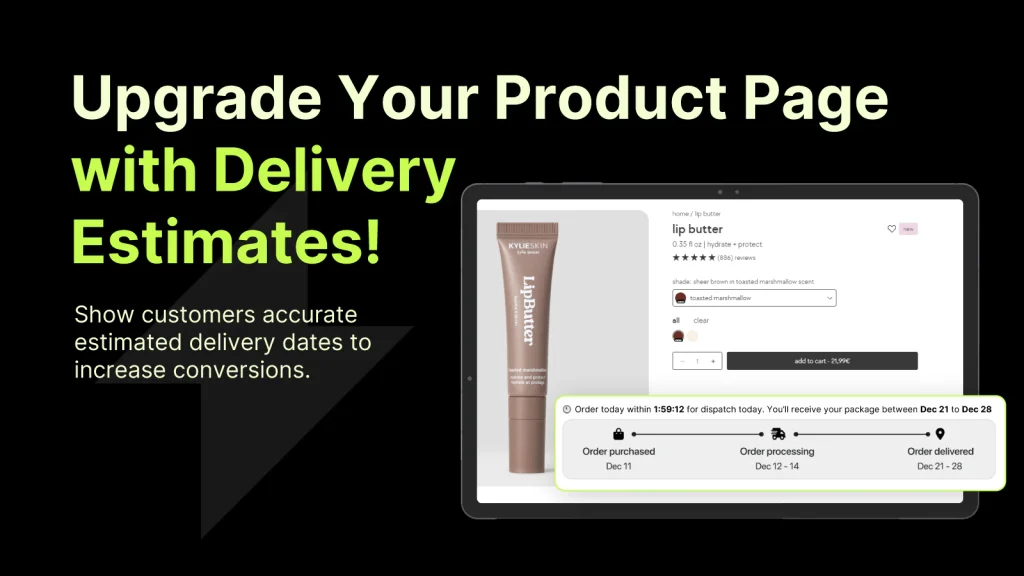
- unclear delivery expectations
- unnecessary distractions
Research found that 18% of users have abandoned orders because checkout felt too long or too complicated, so reducing steps and clarifying costs can directly reduce drop-off.
Because Shopify checkout is partially locked down, CRO in this area focuses on reinforcing confidence before checkout and minimizing friction around it.
Urgency, friction, and timing
Urgency works when it helps shoppers decide, not when it pressures them.
When urgency reflects real constraints, it can have a measurable impact. In one Shopify store, a simple countdown timer increased sales by up to 40% by helping shoppers decide faster, without redesigns or added traffic.
In real Shopify stores, urgency performs best when it:
- reflects inventory or shipping realities
- appears late in the buying journey
- supports an already clear offer
Overuse of urgency elements often damages trust and lowers long-term conversion rates.
Post-purchase CRO (often overlooked)
CRO does not stop at checkout.
Post-purchase experiences influence:
- repeat purchases
- refunds and cancellations
- long-term customer value
Simple post-purchase optimizations can improve lifetime value without increasing traffic or ad spend.
| CRO area | What shoppers feel | What improves | Proven impact |
| Product page clarity | “Do I understand this product?” | Confidence & understanding | Largest share of conversion gains |
| Cart & checkout | “Is this worth it?” | Reduced hesitation | Fewer abandoned checkouts |
| Trust & reassurance | “Is this store safe?” | Buyer confidence | Clear trust cues reduce drop-off |
| Urgency & timing | “Should I decide now?” | Faster decisions | Up to 40% sales increase |
| Post-purchase experience | “Did I make the right choice?” | Repeat purchases | Higher lifetime value |
What is a good Shopify conversion rate?
There is no single “good” conversion rate for Shopify. Most stores fall within a broad range depending on traffic quality, product type, price point, and device mix.
Focusing too much on averages can be misleading. A store with strong margins and repeat customers may perform below industry benchmarks and still grow profitably. Shopify CRO works best when it is tied to your specific context rather than generic targets.
We’ve covered everything about a good Shopify conversion rate in our guide.
How to prioritize Shopify CRO changes
One pattern appears consistently across Shopify stores: CRO efforts fail when tools are added before problems are understood. This applies to all Shopify CRO efforts, from early-stage stores to high-traffic brands.
A practical prioritization order looks like this:
- Remove obvious friction and confusion
- Fix mobile experience issues
- Optimize high-intent pages before experimenting
- Use tools to scale what already works
Most failed CRO attempts start with installing apps rather than diagnosing issues.
When Shopify CRO tools become necessary
Manual fixes and theme tweaks can take you far, but they don’t scale indefinitely.
At some point:
- Repeating tasks becomes inefficient
- Consistency breaks across pages
- Improvements rely too heavily on manual work
CRO tools are most effective when they help execute proven strategies reliably, without adding complexity or performance issues. The best tools support good decisions rather than replacing them.
Find the best Shopify CRO tools for your store
Frequently asked questions
Shopify CRO is the practice of improving how efficiently a Shopify store converts visitors into customers by reducing friction and improving decision clarity.
Some improvements show results quickly, while others take weeks. CRO is cumulative rather than instant.
Poorly built tools can. Tools for Shopify CRO should be chosen carefully to avoid performance issues.
CRO and ads work best together. Improving conversion rate increases the return from every traffic source.
Final thoughts
CRO is not about doing more, it’s about fixing what matters. For Shopify stores, that means improving clarity, reducing friction, and supporting confident decisions at the moments that influence buying behavior most.
While many CRO gains are incremental, real-world examples show that when a clear hesitation point is resolved, results can be substantial, sometimes leading to double-digit lifts and, in specific cases, increases of up to 40%.
If you’re ready to move from CRO theory to execution, the next step is choosing tools that support your strategy without overloading your store.
Find the best Shopify CRO tools for your store